
Buying Your First Home in 2027: The Winter Game Plan for Northwest Indiana
Last Updated: November 2, 2026
Key Takeaways
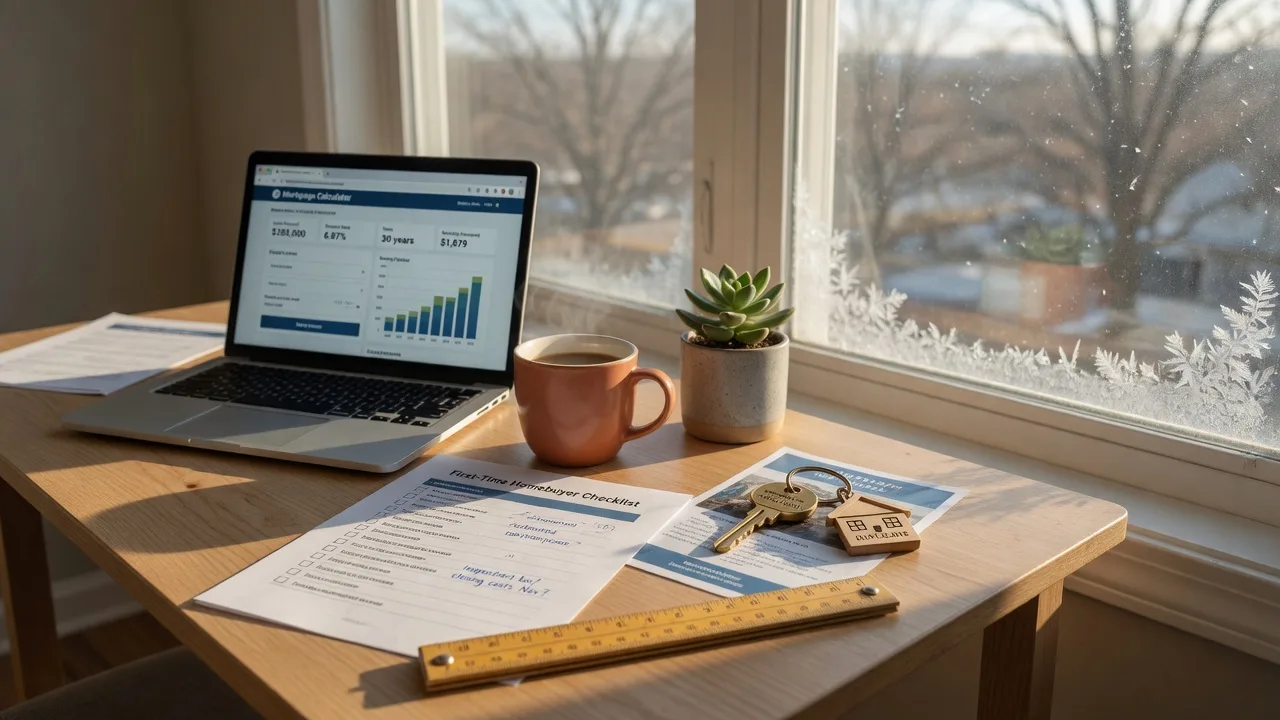
- Winter is preparation season, not waiting season: pre-approval, credit fixes, and down payment savings done now put you first in line when spring listings show up, usually starting in February and March.
- Get pre-approved before you tour; a pre-approval letter tells sellers you are serious and pins down the price range that fits your monthly budget.
- Check all three credit reports free at AnnualCreditReport.com, dispute errors early, keep balances low, and do not open new credit while you shop; aim for 620+ on most conventional loans and 580+ for FHA's 3.5% down option.
- FHA loans work with 3.5% down, conventional loans with as little as 3% down, VA and USDA offer zero-down paths for eligible buyers, and IHCDA runs down payment assistance programs for qualified Indiana buyers.
- Tour in January and February to see what a home is really like: how the heat performs, whether windows draft, and how each Northwest Indiana neighborhood handles snow, ice, and commuting.
If you want to buy your first home in 2027, the most important thing you can do right now is not save longer or scroll more listings. It is to start the preparation work this winter: get pre-approved, check your credit, map your down payment, and use the cold months to research Northwest Indiana neighborhoods that fit your budget and your life. Buyers who do that work now are ready to act the moment the right home hits the market.
I am Liz Rytel-Mudroncik, a top 10% producer in Northwest Indiana with 9 years in real estate, 80+ homes sold, and six properties of my own bought and sold. I bought my first place near Wrigley Field right out of college, so I know exactly how big a first home feels, and I know every first-time buyer mistake because I have guided clients around them for years. Here is the game plan I give first-time buyers across Munster, Highland, Schererville, Dyer, St. John, Crown Point, and Hammond.
Why November Is the Right Time to Start
The Lake County market does not stop between now and spring. In September 2026 the median sale price in Lake County was $289,352, up 3.1% year over year, with about 2.8 months of supply and a 32-day median days on market, per Redfin's Lake County housing market data. That is a tight market: homes that are priced and presented well move in about a month, and a well-qualified buyer can outcompete casual shoppers at any time of year.
Winter also gives you an advantage that summer buyers never get: time and attention. You can book lenders, inspectors, and movers without waiting lists. You can study towns without the pressure of five open houses in one afternoon. And when you tour a home in January, you see how it actually performs in a Northwest Indiana winter, which is information no June photo tour can give you.
Step 1: Get Pre-Approved Before You Tour
A pre-approval is the single biggest power move a first-time buyer can make. Pre-qualification is a quick estimate; a pre-approval means a lender has pulled your credit, reviewed your income and assets, and told you exactly how much home you can buy. Sellers and listing agents take pre-approved buyers seriously, and in a market with weeks of supply measured in months, that seriousness wins negotiations.
Rates move around, so watch the market rather than guessing. The average 30-year fixed-rate mortgage sat near 7.32% for the week ending October 22, 2026, according to the Freddie Mac Primary Mortgage Market Survey. The rate you lock is a product of your credit, your down payment, your lender, and timing, not the season, so shop lenders and ask about rate locks once you have an accepted offer. My mortgage pre-approval guide for Northwest Indiana buyers walks through the documents, the affordability math, and the questions to ask before you sign anything.
Step 2: Fix Your Credit While You Have Time
Your credit score decides both whether you qualify and what rate you pay, so November and December are the perfect months to audit it. Pull your reports from all three bureaus for free at AnnualCreditReport.com, the only federally authorized source for free credit reports. Dispute anything that is wrong, pay down balances to keep utilization below 30%, and do not open new credit cards or finance a car while you are shopping for a home.
One rule I repeat to every first-time client, because I have watched it derail closings: do not buy anything on credit until after closing. Not furniture, not appliances, not a new car. Lenders check your credit again right before closing, and new debt can change your approval at the finish line. My step-by-step credit guide covers the exact thresholds for FHA, conventional, VA, and USDA loans and the fastest safe ways to raise a score.
Step 3: Map Out Your Down Payment and Assistance Options
Most first-time buyers assume they need 20% down, and that assumption keeps them out of the market for years. The truth: FHA loans work with 3.5% down and a 580 credit score, many conventional loans start at 3% down with a 620 score, and VA and USDA loans can require nothing down for eligible buyers. On a $250,000 home, 3.5% down is $8,750, and 3% down is $7,500, real numbers a savings plan can actually hit.
Indiana also has formal help. The Indiana Housing and Community Development Authority (IHCDA) manages down payment assistance programs that qualified first-time buyers can combine with FHA, VA, USDA, and conventional loans. My down payment assistance guide breaks down the programs, income limits, and how to apply, and I can connect you with lenders who run these programs every day.
Step 4: Do Your Homework in Winter, Neighborhood by Neighborhood
Northwest Indiana is seven towns with seven personalities, and a winter visit reveals more than any listing description. Drive your commute in the snow, walk the downtown on a Saturday, and check where the plows work first. Here is how I describe the main first-time buyer towns:
- Highland: the value play. Walkable Ridge Road, the 198-acre Wicker Park, homes typically $250K to $400K. Perfect for buyers who want charm and affordability close to Chicago.
- Munster: Tree-lined streets, Centennial Park, and one of the shortest commutes in the region, with homes priced from the high $300s.
- Crown Point: the historic county seat, with the 1878 courthouse square, Bulldog Park, and every price point from starter homes to new construction.
- Hammond: the affordability leader, with median prices near $200K, South Shore Line service, and Whihala Beach on Lake Michigan.
- Schererville, Dyer, and St. John: the US-30 corridor, with Dyer and St. John leaning toward newer construction and larger lots.
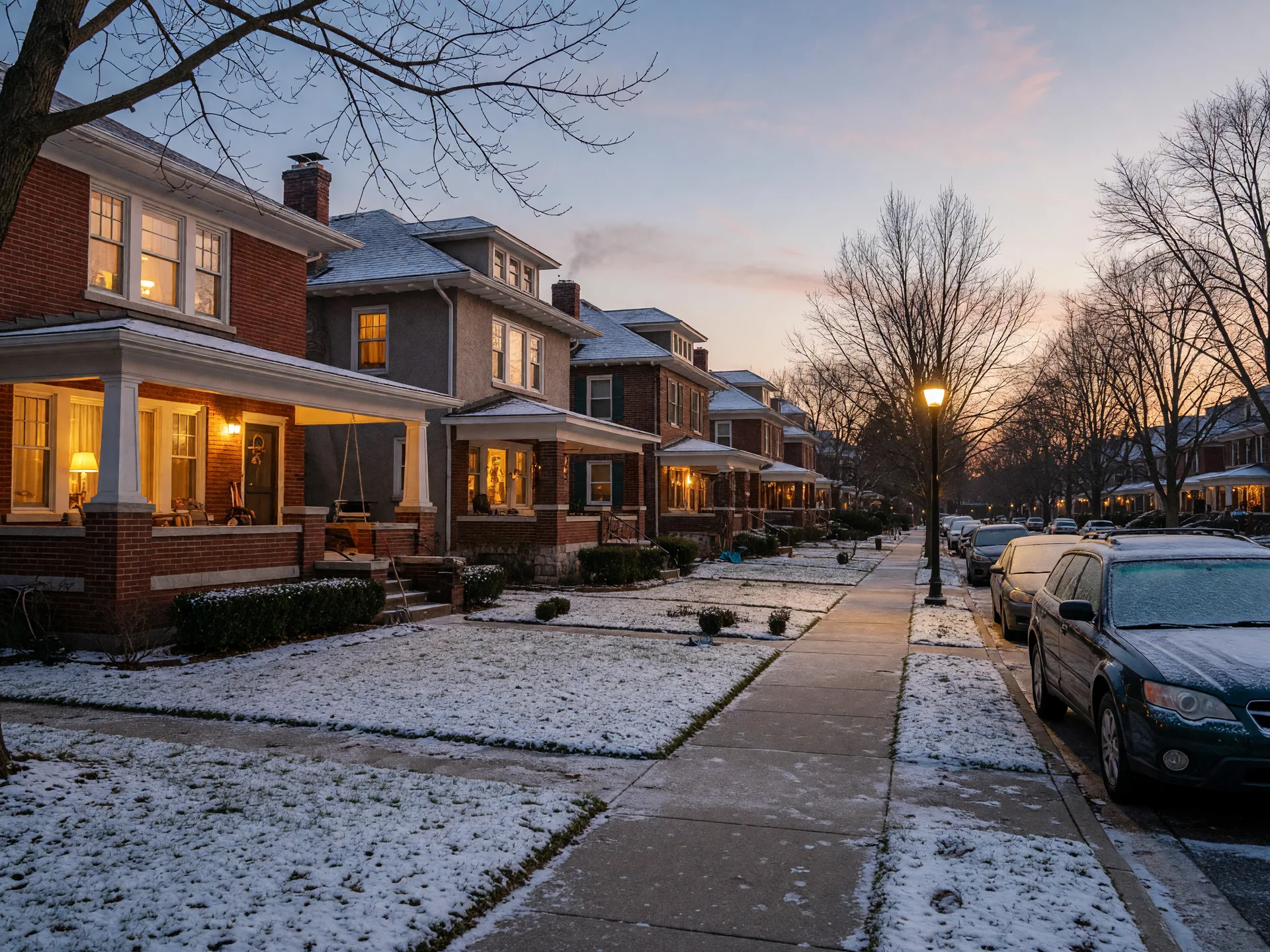
When you tour in winter, look past the decor and check the systems: is the heat on and even? Do windows and doors draft? Is the driveway and sidewalk clear, and what does the furnace room smell like? A home that feels warm and dry in January is a home that was maintained. My town-by-town comparison guide and the Chicago commute guide are good starting points for the research phase.
Step 5: Budget for the Whole Picture, Not Just the Down Payment
Closing costs in Northwest Indiana typically run 2% to 5% of the purchase price, on top of your down payment. Add an earnest money deposit, usually 1% to 3% of the price, plus a home inspection, an appraisal, and a few hundred dollars of moving costs, and you should set your savings goal above the bare minimum. The Consumer Financial Protection Bureau's Owning a Home tools have a closing cost calculator and a mortgage comparison workbook that make this real instead of scary.
Also budget for life after closing: a first home eats money in its first year, from a lawnmower to a washer. My closing costs guide itemizes the typical Lake County charges, and my complete buying guide puts the whole process, from pre-approval to keys, in one place.
What Happens When Spring Arrives
Listings typically pick up in late February and run strong through May across Munster, Crown Point, Highland, and the rest of Lake County. When that wave comes, the prepared buyers, the ones with pre-approvals, savings, and a shortlist of towns, move first. The unprepared ones are still calling lenders during the first open-house weekend of the season. Nothing in the market can substitute for being ready, and being ready is entirely within your control this winter.
Your Month-by-Month Winter Game Plan
- November: Pull your credit reports, dispute errors, calculate your realistic monthly payment, and start talking to lenders about pre-approval.
- December: Build your down payment and closing cost savings, ask your lender what documents you will need, and visit the town squares of the communities on your shortlist.
- January: Complete your pre-approval, start touring seriously, and watch new listings weekly; winter sellers are often the most motivated.
- February: Tour in earnest, make your first offers, and stay disciplined: no new credit, no big purchases, no emotional overbidding.
- March and beyond: Move with confidence when the right home appears, negotiate from strength, and let me run the numbers with you first.
The Bottom Line
Buying your first home in 2027 starts this winter, not next spring. Get pre-approved, fix your credit, save with a target, and learn the towns, and you will walk into the spring market as the buyer sellers compete for instead of the buyer still waiting for their spot. I have got your back through every step, and I have done this exact dance, as a buyer, an investor, and a Realtor, more times than I can count.
If you want a second set of eyes on your plan, reach out for a free consultation or market analysis, or call (219) 670-3704. I want you to feel confident, not pressured, and I want your first home to be the one that sets you up for a lifetime of smart moves.
Related Reading
Mortgage Pre-Approval in Northwest Indiana
How much you can afford, down payment options, loan types, and the exact steps to get your pre-approval letter.
How to Improve Your Credit Before Buying
The credit score thresholds for FHA, conventional, VA, and USDA loans, and the safe way to raise your score fast.
Down Payment Assistance Programs in NW Indiana
IHCDA, FHA, VA, USDA, and local help for first-time buyers who want to buy with less money out of pocket.
From Accepted Offer to Closing Day
The 30 to 45 day path from acceptance to keys: earnest money, inspections, appraisals, and the final walkthrough.
Explore the Highland neighborhood guide or the Munster neighborhood guide, or contact Liz for a free consultation or market analysis.
Frequently Asked Questions
When should I start the home buying process if I want to buy in 2027?
Start now, especially if you want to buy in the spring. Use November and December to check your credit, build your savings, and start pre-approval conversations with a lender. January is the ideal month to complete your pre-approval and begin touring, because fewer buyers are out and homes show their true winter personality. February through April is when listings across Northwest Indiana typically pick up, and buyers who arrive with a pre-approval letter and a plan can move the moment the right home appears.
How much money do I need for a down payment on a first home in Northwest Indiana?
It depends on the loan you qualify for. FHA loans allow 3.5% down with a credit score of at least 580, plenty of conventional loans work with as little as 3% down and a score of 620 or higher, and VA and USDA loans can require zero down for eligible buyers. On a $250,000 home, a 3.5% down payment is $8,750, plus closing costs, which typically run 2% to 5% of the purchase price. Indiana offers down payment assistance through the Indiana Housing and Community Development Authority (IHCDA), so do not assume you need 10% or 20% saved before you start.
Do I need a pre-approval letter before I can look at homes?
You do not need one to browse online, but you absolutely should have one before you tour in person or make an offer. A pre-approval letter tells the seller you are a serious buyer, and it tells you exactly what monthly payment fits your budget so you do not fall in love with a house you cannot afford. In a competitive Lake County market with roughly 2.8 months of supply, sellers and listing agents routinely prioritize offers from pre-approved buyers, because a pre-approval removes a major uncertainty from closing.
What credit score do I need to buy a home in Northwest Indiana?
FHA loans work with a 580 credit score and 3.5% down, most conventional loans want 620 or higher, USDA guidelines call for 640 in eligible rural areas, and VA loans have no official minimum score, though lenders typically look for at least 580 to 620. Your score matters less than your full profile, payment history, income, and debt, but a higher score usually means a lower rate. Pull your free weekly reports from each bureau at AnnualCreditReport.com now, dispute any errors, and keep balances low while you save.
Is winter actually a good time to buy a home in Northwest Indiana?
Yes, for an informed first-time buyer it can be the smartest season. There are fewer competing buyers, sellers who list in late fall and winter are often motivated, and a January or February showing reveals what a home is genuinely like in the coldest months: how the heating system performs, whether windows draft, and how the neighborhood handles snow and ice. You lose some spring inventory, but you gain honest information and negotiating room, and you are positioned to close before the busy spring market heats up.